
Artificial intelligence (AI) can not only accelerate the processing of support requests, but also improve it significantly. I work at Innovaforge in the field of generative AI and would like to tell you how we worked with one of Germany's largest energy companies and integrated AI into customer service through the automated processing of customer support requests.
Challenge: Overwhelmed by rising numbers of requests
The company receives several tens of thousands of requests every month via various channels: post, telephone, self-service portal, etc. Under these conditions, conventional processing methods reached their limits: high workload for managers, manual routing, long processing times, errors and the human factor. This was one reason to look for new solutions. In addition, the development and introduction of large language model (LLM) technologies provided an additional incentive to explore innovative approaches to processing requests.
Decision: Automation through AI
Similar automation projects have already been carried out successfully worldwide and also in Germany, particularly for standard and recurring requests.
Objectives and expected results
In the initial phase of the project, the most important objectives and the expected impact were clearly defined:
- Automation of the initial classification and routing of requests received by post: More than half of all requests per month should be classified and routed automatically in order to reduce the workload of the case handlers.
- Faster processing of requests: Thanks to fast and precise routing of requests, the service shortens its response time to user requests.
- Testing the hypothesis that better classification of requests is possible through interactive refinement of the LLM model's interactions with users.
- Reduction of operating costs: By using advanced artificial intelligence technologies and large language models, routine tasks are to be reduced to a minimum, thereby lowering the cost of manual work.
Description of the business process
The heart of the user support process is the ITSM system, which manages the flow of requests. User requests from various channels are first categorised manually according to content, priority and other parameters. The call centre managers are responsible for this. After categorisation, the calls are routed to the appropriate second-line service groups for further processing or resolution.
The role of AI-ICS in routing requests
The first version of the “Incident Classification System (AI-ICS)” service was developed to automate the classification and routing process.
- AI-ICS analyses and classifies requests based on their content and identifies the correct categories: service, category, type of request and target group.
- Requests classified by AI-ICS are automatically routed either directly to the responsible departments or passed on for further review if the system is not confident about the classification.
The main actors are AI-ICS, the ITSM system and our client's contact centre managers, who work together to ensure efficiency and accuracy in the processing of user requests.

Figure 1: Platform components, business process participants and how they interact
Training data and training kit
Scope and sources of the data
An extensive data set of almost one million requests from the last two years was used for the project. This data contained the following information:
- Structure of the requests: Approximately 50% of requests were divided into 7 services, 14 categories and 15 groups. The remaining 50% of the data was distributed across 50 services, 107 categories and 83 groups, resulting in a total of around 5,300 unique combinations.
- Suitability of the data: Of the entire array, around 79% of requests were suitable for training and testing the model “as is”. These were short requests no longer than 500 characters. Longer texts required pre-processing, including summarisation and the removal of redundant information.
- Integration of attachments: A significant proportion of requests (34%) contained graphical attachments. However, tests showed that adding data from these attachments did not improve the model's accuracy.
Approach to implementing AI-ICS
Development and deployment
The project comprised several key phases in the development and implementation of the AI customer service system:
- Selection of the ML model: Identifying the suitable model for classifying and routing requests.
- Service development: Creation of a Docker container for the ML model and development of an API for integration with the ITSM system.
- Pre-training of the model: Continuous training of the model on the basis of new data from the helpdesk.
- Reporting and evaluation: Introduction of a reporting system for analysing AI-ICS performance.
- Tests and quality assessment: Conducting tests and evaluating the performance of the system.
- System administration: Development of tools for managing model parameters and request types.
Machine learning tools
The AI-ICS service uses a range of advanced machine learning technologies:
- PyTorch: the most important framework for working with models.
- Pandas: a tool for processing and analysing data.
- MLflow: a platform for managing machine learning and automating pipelines.
- Matplotlib and Seaborn: libraries for data visualisation.
- LaBSE: a transformer model optimised for the task of classifying and routing requests in different languages.
Classifier architecture based on the LaBSE model
Introduction to large language models
Large language models such as GPT and BERT have revolutionised natural language processing by providing translation, summarisation and question-answering capabilities. LaBSE has been optimised for multilingual use and is ideal for global companies with multilingual requests.
Model selection
The decision in favour of the LaBSE model was the result of careful research and experimentation. During the AI-ICS development process, we tested GPT2, BERT and other transformer models. At each stage, hypotheses were tested, performance analysed and our requirements for accuracy and processing speed met. LaBSE proved to be the most effective model, as it can handle multilingual tasks, is lightweight, offers high processing speed and can classify and route requests most accurately. Moreover, LaBSE proved resilient to changes in the data and flexible to integrate – important factors in selecting the model for the project.
The role of LaBSE in routing requests
In the company, a classification architecture based on the LaBSE transformer model plays a key role in the intelligent routing of requests to IT support. Here is how it works:
- Data preparation: The AI-ICS service starts by receiving the request data. This includes the text of the request itself, data about the manager who submitted the request, and a special flag, “isSpecial”. This flag is used to identify users whose requests may require special attention or manual categorisation, even though they are also included in the general analysis for statistical data collection.
- Tokenisation and embedding: The request text and the associated data are combined and processed with the LaBSE tokeniser, which converts the text into a vector representation. These vectors or embeddings help to encode the semantic content of the text into a machine-processable format.
- Classification of attributes: Embeddings are analysed with the help of classification models that define key attributes for each request (type of service, category of the request, etc.). In some cases, a single model can be used to define several related attributes – e.g. category and service at the same time.
- Return of results: Classification models return values for each of the attributes along with parameters that reflect the model's confidence in each of the predictions. These parameters help with the further routing of requests.
- Routing of the requests: Based on the attribute data and the model's level of confidence, AI-ICS decides on the routing of the request. If confidence is high, the request is forwarded directly to the responsible department. If the model is not sufficiently confident, or if the request is subject to additional rules (e.g. requests from special users), it can be routed for additional manual validation.
Practical benefits of using LaBSE
- Faster processing: Automating classification reduces the processing time of requests by up to 60%.
- Improved accuracy: Precise category detection reduces routing errors.
- Cost reduction: Efficient automation reduces the resources required for manual sorting and request processing. (In our case, the cost reduction during the test month was around 34%, provided the staff were deployed for other tasks.)
Results of the AI-ICS service prototype in our client's business processes
Classification efficiency
During the test period, 61% of requests were classified by the AI in customer service with a confidence threshold (CT) of 0.8, while the remaining 39% were routed for manual validation (Figure 2).
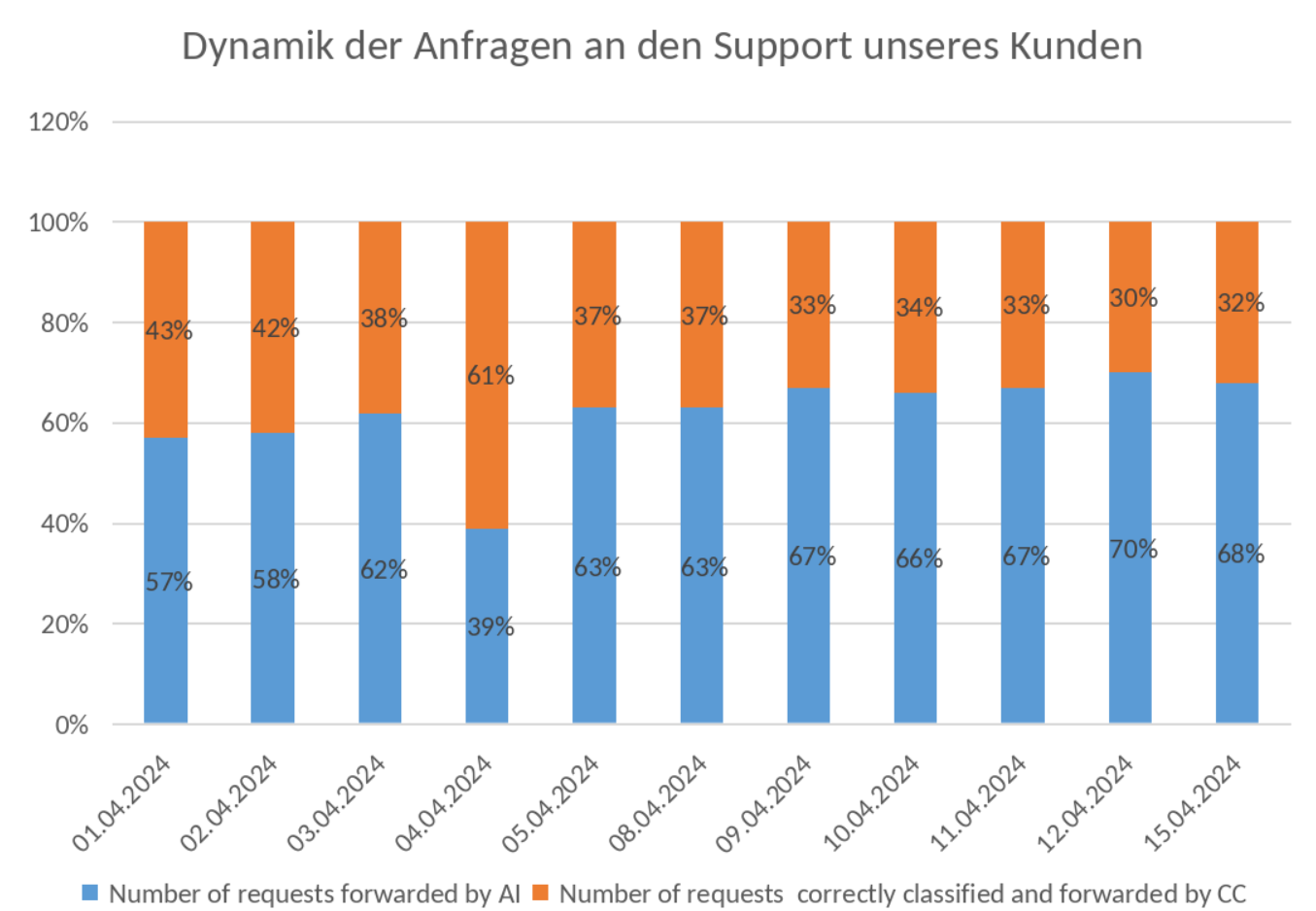
Figure 2: Dynamics of our client's support calls
Of the requests processed by the AI, 84% were categorised precisely by service, category, type and group attributes, resulting in overall coverage of 51.24% (84% * 61%) (Figure 3).
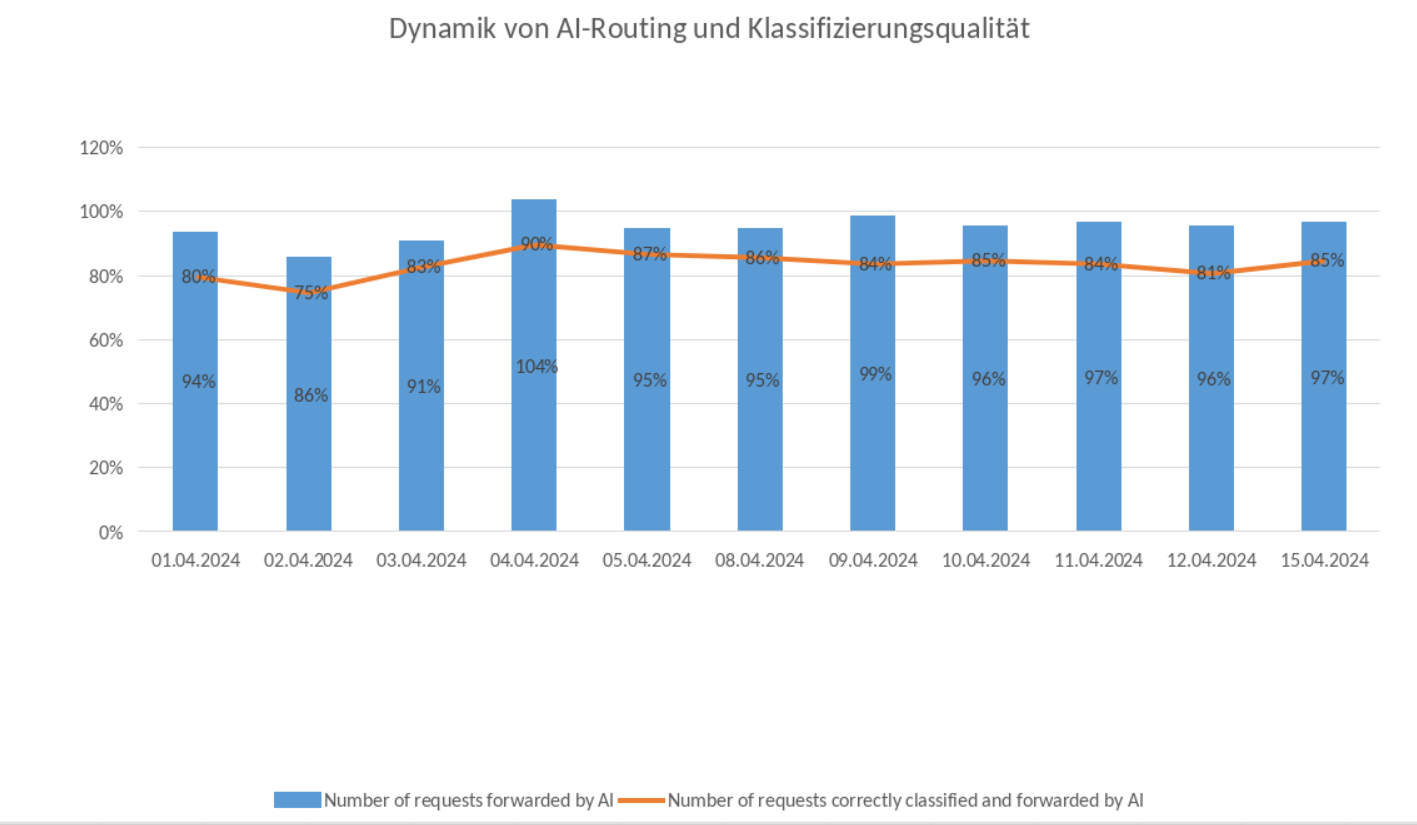
Figure 3: Dynamics of AI routing and classification quality
The average proportion of correctly classified and routed calls in the contact centre is 75% per day (Figure 4).
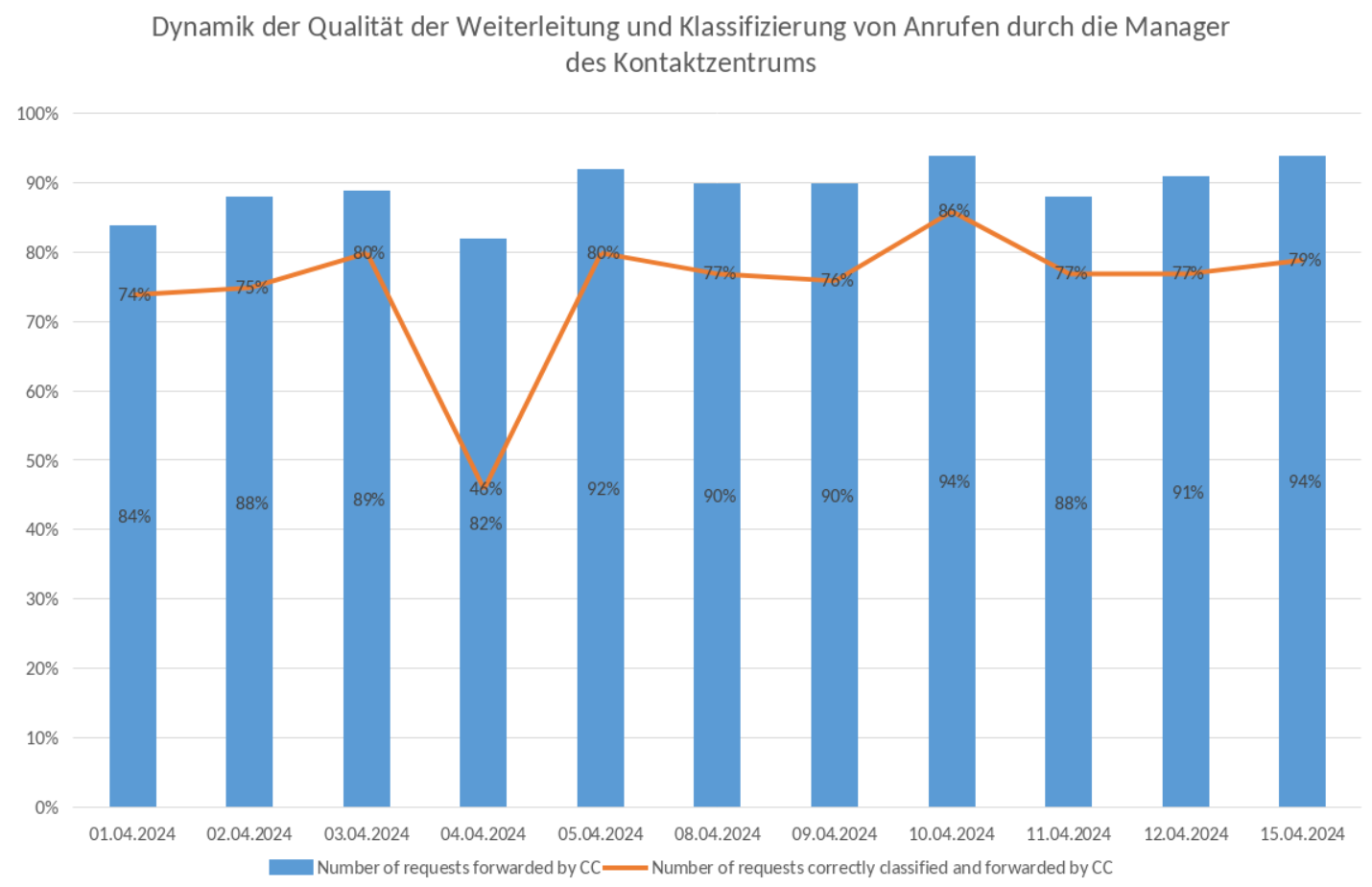
Figure 4: Dynamics of the quality of call routing and classification by the contact centre managers
Process optimisation
Through the use of AI and ICS, classification accuracy was increased to 85%, and the time and cost of processing requests were reduced by lowering the proportion of requests requiring manual classification. This in turn led to resource savings and improved customer service quality.
Expected results
It is expected that up to 80% of all electronic requests will be processed efficiently by the AI in customer service without manual routing, and that up to 84% of requests will be routed correctly. This confirms the system's potential to reduce operating costs significantly while maintaining high quality standards in the processing of requests.
Further development of AI-ICS in the client's company: deepening automation and integrating new models
Expanding the possibilities of AI in customer service
As part of the continuous development of the AI-ICS system, the company is actively working on introducing functions for the automatic processing of standard requests. With the help of intent selection and subsequent automatic answering, the model will be able to solve typical tasks independently without involving specialists. This significantly accelerates the service process and considerably increases its efficiency using AI in customer service.
Improved user interaction
One of the new functions is the AI's ability to ask clarifying questions. This allows it to classify requests more accurately and find the most suitable solutions, which minimises the likelihood of errors and increases customer satisfaction.
Integration of advanced AI models
The tool line-up includes the latest machine learning models, such as LLAMA 3 and Mixtral, which offer improved capabilities for analysing and processing requests. These powerful models provide deeper contextual understanding and are able to process complex requests with high accuracy.
Future plans
The company plans to integrate further new technologies in order to reduce dependence on the human factor in the processing of requests. The development and testing of new functions has already shown clear successes, and this trend with AI in customer service will continue – both in terms of the speed of the service and the quality of request processing.
We look forward to supporting you with the processing of your data! We have extensive experience in data warehouse modelling, in building reporting systems in a cloud infrastructure and in using machine learning to solve real business problems.